Honestly, every time friends ask us about the best time to visit Tuscany, we answer with a question of our own, which is: what would you love to do once you get here?
That’s because the best time to go to Tuscany actually depends on the Tuscany you want to experience.
We can ask because we’re a team of locals, taking care of vacation homes right across the hills where we were born and raised. Over the years we’ve watched our guests realize that there really is no “off-season”, and every time of year opens a different door.
So, this guide walks you through all four seasons, month by month, with weather insights, lesser-known gems, suggestions and events worth planning around. All the little details you only learn from a lifetime spent living here.
If you already know what you’re after, the table below will point you straight to your season. If you’re still on the fence, well, grab a coffee, read on and let the land make its case.
This guide tells you when to come. Our free seasonal guide tells you where to go: the areas we love most in each season, the best golden hour spots and how to get there. Download the guide
Find Your Season: The Best Time to Visit Tuscany for What You Want
As we said, the best time of year to visit Tuscany really depends on what you’d like to experience. So down below we’ve matched selected experiences with the time of year when Tuscany offers them at its fullest.
| If you want… | Plan for… |
|---|---|
| Green hills and wild red poppies along the country roads | Late April and May |
| Easter in Florence and the Scoppio del Carro, a centuries-old ritual in which a cart of fireworks explodes in front of the Duomo | Easter week, in late March or April |
| Beach days on the Tuscan coast and long summer evenings | June to August |
| Fields of sunflowers in full bloom | Late June and July |
| The Palio di Siena, a historic bareback horse race around Siena’s main square | July 2 and August 16 |
| The grape harvest in the vineyards of Chianti and beyond | September to mid-October |
| New olive oil fresh from the mill and white truffles in San Miniato | Late October and November |
| Christmas markets in Florence and Arezzo | Late November and December |
| Natural hot springs and quiet hill towns | December to February |
| The lowest prices of the year | November to March, outside the holidays |
Of course, some of these moments draw a crowd. If you ask us, the weeks around Easter, the Palio and Ferragosto fill up first, so you’re better off booking your stay well in advance.
And if you’re looking for a more specific answer about the best month to visit Tuscany, here are some insights down below that can be really useful to you.
The Tuscany Weather by Month
Whatever you choose, it may help to know what the sky has in store. Tuscany has a mild Mediterranean climate, with hot, dry summers and cool, damp winters, while spring and fall bring the softest light of the year.
| Month | Avg high °F (°C) | Avg low °F (°C) | Rainy days | Rainfall (mm) | Sunset (approx.) | Crowds |
|---|---|---|---|---|---|---|
| January | 52 (11) | 36 (2) | 8 | 58 | 5:00 pm | Low |
| February | 55 (13) | 37 (3) | 7 | 64 | 5:45 pm | Low |
| March | 61 (16) | 41 (5) | 7 | 61 | 6:20 pm | Low |
| April | 68 (20) | 47 (8) | 9 | 67 | 7:55 pm | Rising, busy at Easter |
| May | 76 (24) | 53 (12) | 8 | 63 | 8:30 pm | Medium |
| June | 84 (29) | 61 (16) | 5 | 45 | 9:00 pm | High |
| July | 90 (32) | 65 (18) | 3 | 25 | 8:55 pm | High |
| August | 90 (32) | 65 (19) | 4 | 37 | 8:20 pm | High, highest on the coast |
| September | 81 (27) | 59 (15) | 6 | 67 | 7:25 pm | Medium to high |
| October | 71 (22) | 52 (11) | 9 | 105 | 6:35 pm | Medium |
| November | 60 (16) | 44 (6) | 10 | 115 | 4:50 pm | Low |
| December | 53 (11) | 37 (3) | 10 | 81 | 4:40 pm | Low, busy over the holidays in Florence |
These averages mostly describe Florence and the inland hills, while the rest of the region can feel quite different depending on where you are.
Along the coast, from Versilia down to the Maremma, the sea keeps winters milder and the afternoon breeze makes summer easier to bear.
Move inland, to Chianti, the Val d’Orcia or the Val di Chiana, and summers run hotter while winter mornings turn colder, often with fog settling in the valleys.
Climb higher still, from Monte Amiata to the Garfagnana, and you can find snow in the winter, with cooler summer evenings than in the rest of the region.
Wherever you stay, rain comes mostly in fall and early spring, with November usually the wettest month, so a light rain jacket from October to May is all you need.
Tuscany in Spring (March to May)
| Tuscany spring at a glance | |
|---|---|
| Temperature | 46 to 68°F (8 to 20°C) |
| Crowds | Low, rising from April |
| Prices | Below peak season |
| What to pack | Layers, a light rain jacket, comfortable shoes for cobblestones |
| Ideal for | Green countryside, wild poppies, Easter traditions, walks and bike rides |
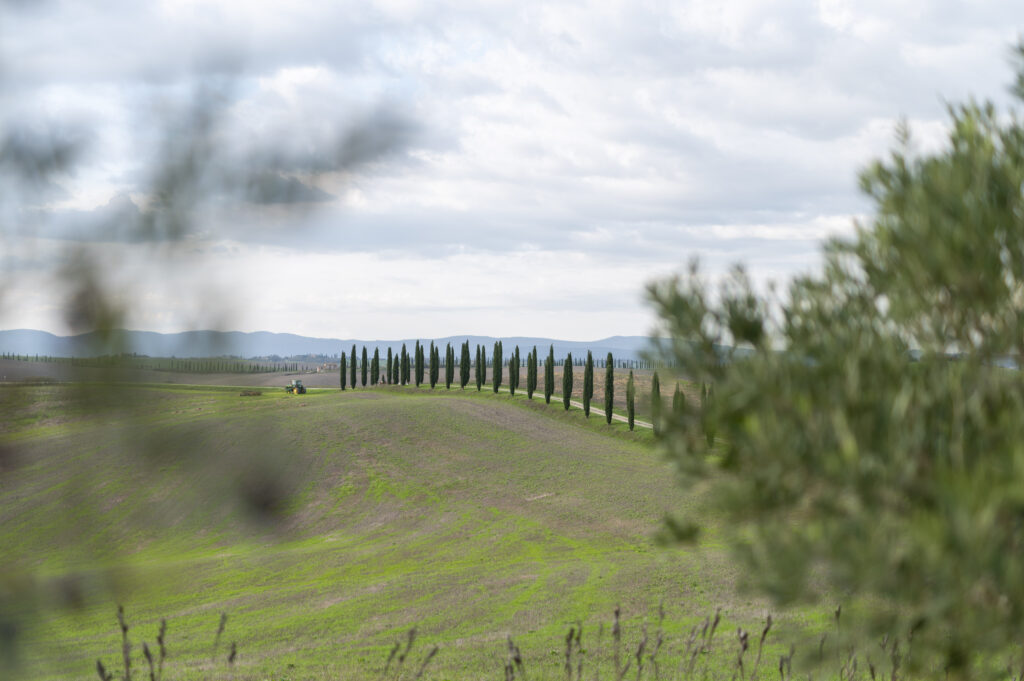
Here in spring, the hills turn an almost electric green, and before long red poppies start to line the white gravel roads.
Out in the fields, farmers prune the olive trees while the vines push out their first leaves, and that same fresh energy reaches our tables with artichokes, fava beans and wild asparagus.
For us locals, it’s the moment to roll down the car windows and plan the first long lunch outdoors.
Tuscany in March
Is March a good time to visit Tuscany? Absolutely! If you like quiet towns and don’t mind a mix of sun and showers, it’s perfect timing.
The weather in Tuscany in March is mild by day and still a bit cool at night, which keeps most visitors away. The good news for you? Museums have shorter lines, and prices are still at low-season levels.
Little by little, you can see Tuscany starting to stretch with fruit trees blossoming, the first outdoor tables appearing in the squares, and markets like Sant’Ambrogio in Florence filling with spring greens.
Some countryside restaurants and agriturismi reopen during the month too, so check their dates before you set your heart on a specific place.
Our local tip: plan your days around the light. Visit towns in the morning and keep the drive through the hills for the afternoon, so you can watch the sunset over the blossoming fields. That’s pretty magical.
Tuscany in April
Is April a good time to visit Tuscany? Yes, if you want to watch the countryside turn green, enjoy the first warm afternoons and, in most years, feel the energy of Easter.
Just don’t expect settled weather yet. April weather in Tuscany is quite changeable. You still need a sweater in the mornings and evenings, while sunny afternoons can feel like early summer, and showers are part of the deal.
With the warmer days, the travel season begins in earnest, especially in Florence, where hotels and apartments raise their prices from this month on.
Easter adds to the bustle. It falls in April in most years and in late March in the others, and the days around it are the busiest of spring, because Italians travel too over Easter Monday, which we call Pasquetta.
Many shops close for the holiday, while restaurants stay open and are often fully booked, so if you want to taste the local Easter dishes, reserve your lunch well ahead.
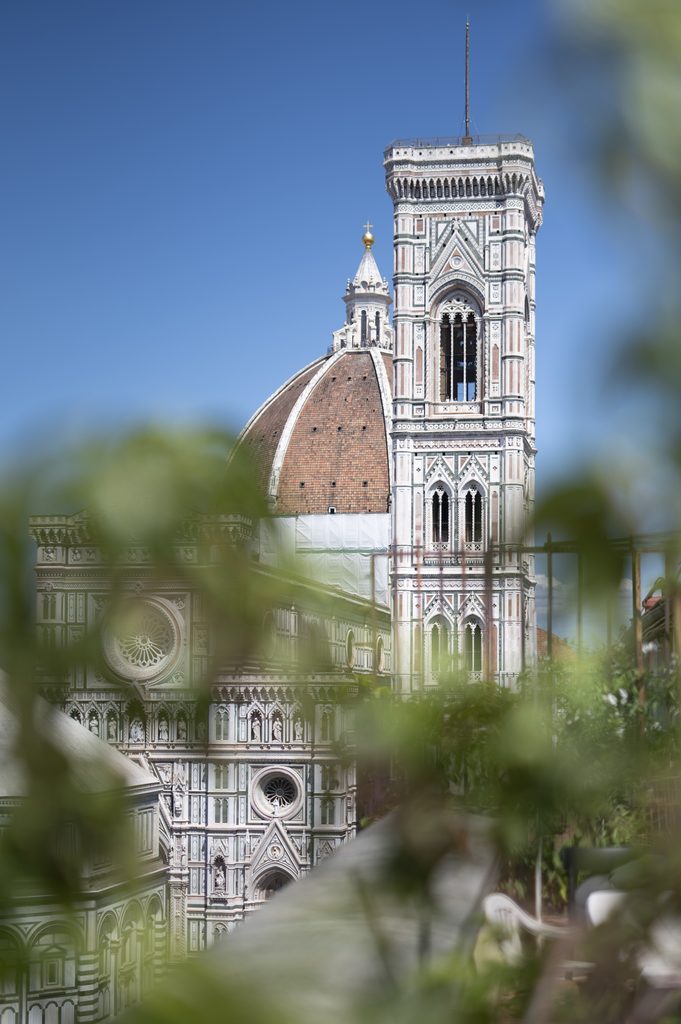
On Easter Sunday itself, Florence celebrates the Scoppio del Carro, the Explosion of the Cart. A towering wooden cart, pulled by white oxen, stops in front of the Duomo, and during Mass a dove-shaped rocket flies from the altar and sets off its fireworks.
It’s just what it sounds like, and it’s wonderful, believe us. Since Florentines have kept this ritual going for centuries, the square fills up early, so arrive in good time if you want a spot.
And if you’re into wine, this is also when the countryside wineries open for their first tastings among the newly green rows.
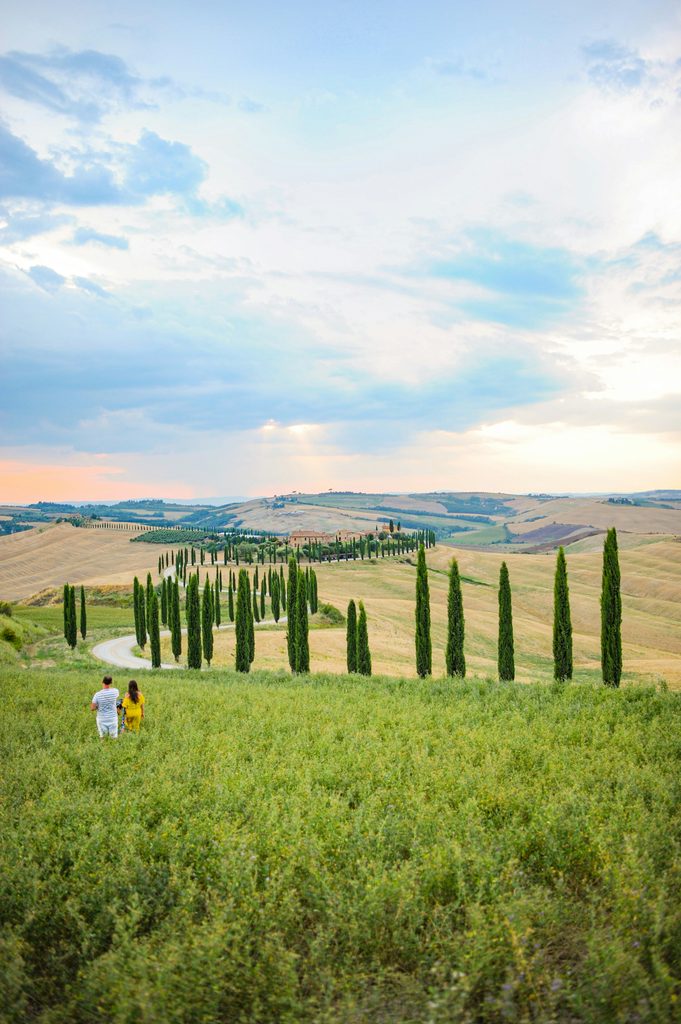
By the end of the month the hills of the Val d’Orcia take on the shade of green you’ve seen in every photo of Tuscany, and the first poppies appear along the roadsides.
Our local tip: if the Scoppio del Carro is on your list, stay somewhere you can reach Florence early on Easter Sunday morning. Then spend the rest of the long weekend in the countryside and save the city’s museums for a few days later, once the holiday crowds have gone home.
Tuscany in May
Is May a good time to visit Tuscany? Yes, if you’ve been dreaming of green hills, wild poppies and long lunches outdoors.
Temperatures in Tuscany in May are warm by day and pleasant in the evening, although the month can still bring the odd heavy shower, especially in Florence, so you’d better keep a light jacket in your bag.
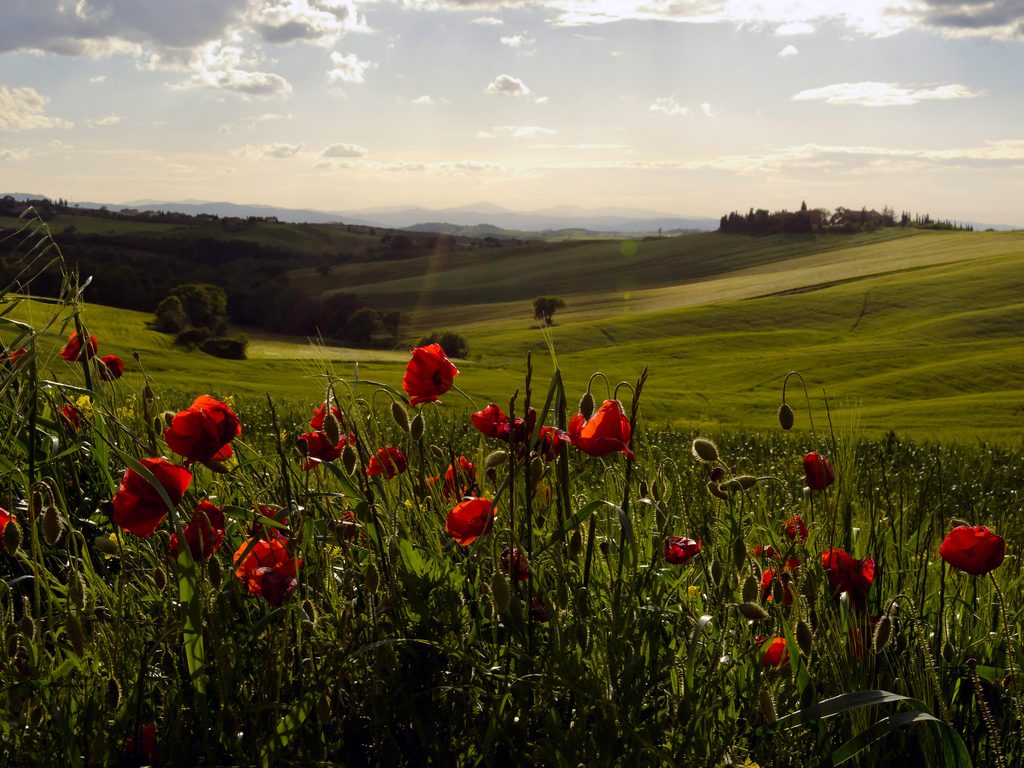
Those showers are part of what makes this the month of the poppies. They bloom along the white roads of the Val d’Orcia and the Crete Senesi (both in the province of Siena), between wheat fields that are just starting to turn gold.
Flowers take over the city too. Only a few visitors know this, but in Florence the Giardino dell’Iris (the iris garden) opens for just a few weeks below Piazzale Michelangelo, and it’s really worth a visit, also because this flower is the true symbol of the city.
Just remember that May 1 is a national holiday, so expect plenty of Italians on day trips that weekend.

Our local tip: poppies don’t follow the calendar. Depending on the spring rain, a field can be at its best for just a short time, so if you spot one glowing red from the road, stop right there. You won’t regret it.
Stay in spring
Homes with gardens and terraces for the first long lunches outdoors.
Tuscany in Summer (June to August)
| Tuscany summer at a glance | |
|---|---|
| Temperature | 64 to 95°F (18 to 35°C) |
| Crowds | High, peaking around Ferragosto (August 15) |
| Prices | Peak season, highest on the coast |
| What to pack | Linen, a sun hat, high-SPF sunscreen, a reusable water bottle |
| Ideal for | The coast, long evenings, village festivals, sunflower fields |
Summer is Tuscany at its liveliest, and at its hottest. That’s no secret.
The heat comes with long days, warm sea water and a festival in almost every village, often a food festival that we call sagra, which is basically a celebration of one local dish. And we have thousands of them. Not metaphorically.
To enjoy it all, you’d better plan your days around the heat: towns and hills in the morning, the sea or the pool in the afternoon (or somewhere refreshing), and out again after sunset, when the squares fill up and dinner starts late.
Since August is when Italians take their own vacation, the coast gets busy, so book early, especially by the sea.
Tuscany in June
Is June a good time to visit Tuscany? Yes, if you enjoy the seaside, the longest days of the year and a calendar full of festivals.
In early June the weather in Tuscany is pleasantly warm, and the heat builds slowly toward the end of the month.
Those long evenings are made for celebrating, and June is festive across the region. Just think: on the evening of June 16, Pisa lines the Arno with thousands of candles for the Luminara di San Ranieri, and the next day the city’s districts race their boats on the river.
A week later it’s Florence’s turn. June 24 is the feast of Saint John the Baptist, the city’s patron, and the day of the final of the Calcio Storico, a rough mix of football, rugby and wrestling played in Renaissance costume in Piazza Santa Croce.
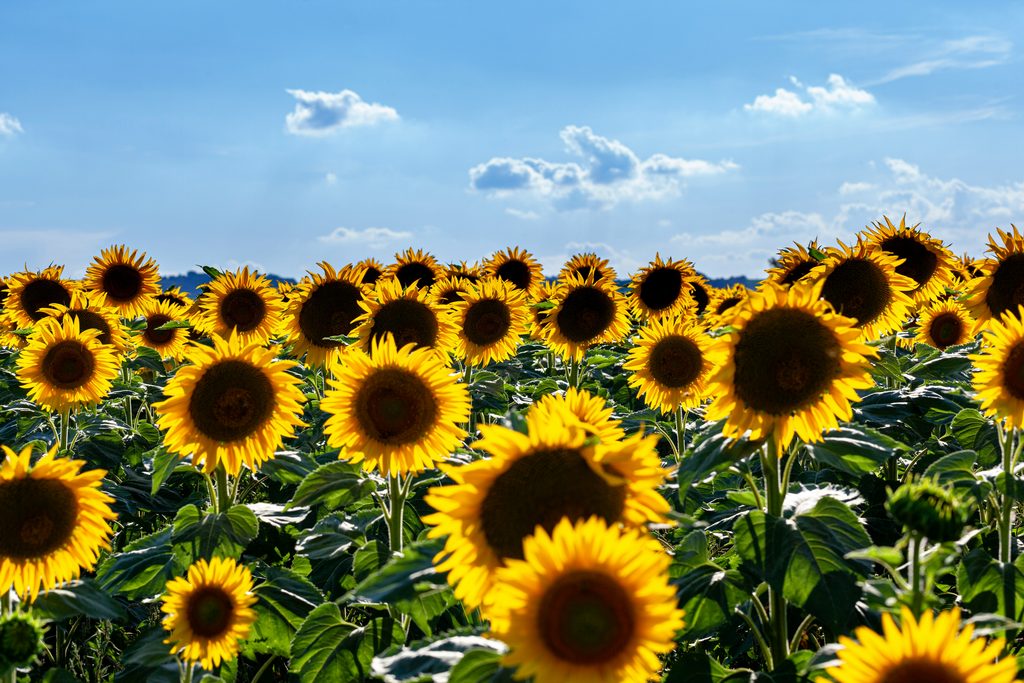
Out in the countryside, the first sunflowers open in the Val di Chiana toward the end of the month, just as the beaches start to fill up on weekends. That makes the weeks from mid-June to early July, before the strongest heat, a lovely time to combine days at the sea with towns and hills.
Our local tip: choose a home with outdoor space, because in June the best moments come in the cooler hours.
Start the day with breakfast in the garden while the air is still fresh, and when the heat breaks, set up an aperitivo on the terrace with a glass of local white. We drink it straight from the fridge, but absolutely without ice.
Tuscany in July
Is July a good time to visit Tuscany? Yes, if you love the sea, open-air festivals and long dinners outside.
July weather in Tuscany is among the hottest of the year, with inland afternoons that can reach the 90s°F, which is why the cooler hours become the heart of the day.
Siena doesn’t let the heat slow it down. On July 2 it runs the first of its two spectacular Palios, where ten horses, ridden bareback by jockeys who represent the city’s contrade, race three laps around Piazza del Campo in about ninety seconds. That’s wild.
The race itself is short, yet the whole city lives it for days, with trial runs, dinners in the streets and flags on every corner. Of course, hotels and rental cars book up early.

The rest of the region keeps the party going. Certaldo Alto hosts Mercantia in mid-July, when acrobats, dancers and musicians turn the alleys of the medieval village into an open-air stage, and at the end of the month Livorno brings its old canals to life with Effetto Venezia.
If you’re hoping to see lavender in bloom, though, come early in the month, since most fields are harvested in July.
Our local tip: if the Palio is part of your plans, book your stay in or near Siena months ahead. Believe us.
And since standing in the center of the Campo for the race means hours in the summer sun, many visitors prefer to watch one of the trial runs held in the days before, which carry the same excitement with far more room.
Tuscany in August
Is August a good time to visit Tuscany? Yes, if you’re after the full Italian summer, with beaches, village festivals and warm nights.
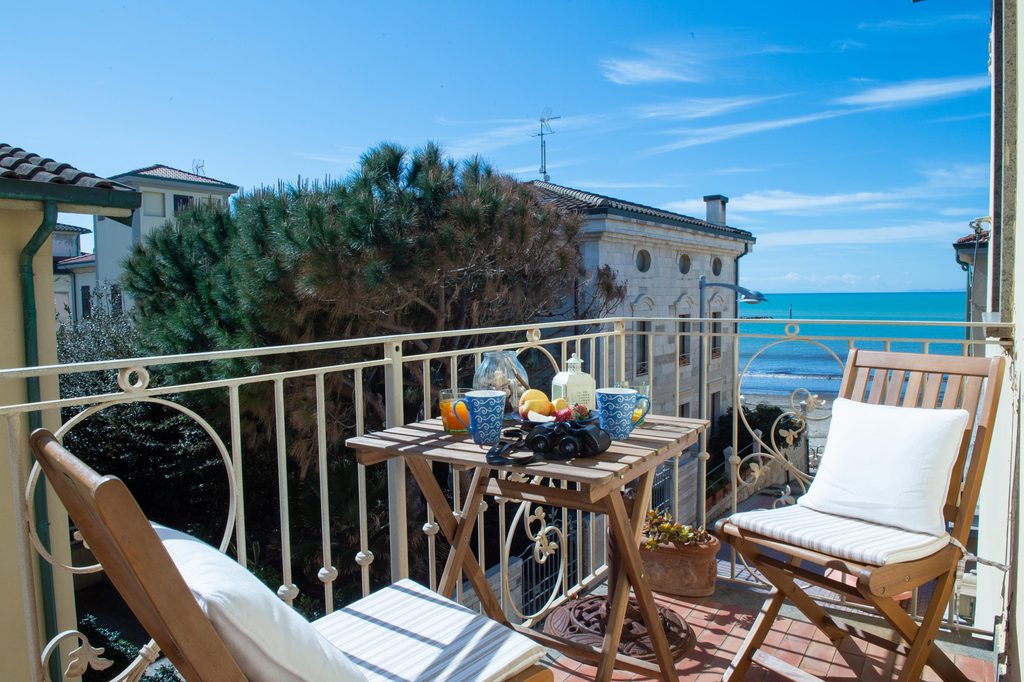
The weather in Tuscany in August is as hot as in July, and the coast is at its busiest, because this is when Italians take their own vacation.
It all peaks with Ferragosto, the holiday on August 15. In the week or two around it, many shops and bakeries, along with some family-run trattorias, close for their own holidays, sometimes with just a handwritten sign on the door.
With so many locals at the sea, the cities feel almost empty, even though museums, sights and most restaurants stay open.
The coast is the opposite: beaches and seaside towns are at their fullest, so book homes there well before the holiday.
A day later, on August 16, Siena runs its second Palio, while in the countryside small towns hold the sagre we mentioned before, summer food festivals where everyone sits at long tables to celebrate one local dish.
A sagra is one of the easiest ways to eat with the locals, and for us it’s one of the best parts of a Tuscan summer.
Our local tip: in the days around Ferragosto, call ahead before driving out to a specific trattoria or winery, because many family-run places close for their own holidays. And do your grocery shopping before August 15, when many food shops close for the day.
We can arrange
[DA CONFERMARE] A private wine tasting in Bolgheri at golden hour.
Stay in summer
Homes with pools and outdoor space for the long Tuscan evenings.
Tuscany in the Fall (September to November)
| Tuscany fall at a glance | |
|---|---|
| Temperature | 50 to 75°F (10 to 24°C) |
| Crowds | Medium in September, dropping in October and November |
| Prices | Shoulder season, well below summer |
| What to pack | Layers, a light rain jacket, sturdy shoes for vineyards and woods, and room in your bag for a bottle of new olive oil |
| Ideal for | The grape harvest, new olive oil, truffles, fall colors |
Fall, or autumn as our European guests call it, is when Tuscany harvests.
First come the grapes, then the olives, and if you go for a walk in the woods, you’ll probably bump into someone carrying a basket full of chestnuts or porcini.
All that bounty ends up at home, where ribollita is back on the stove and we all wait for a fettunta, which is basically a slice of toasted bread, a rub of garlic and plenty of new olive oil. Honestly, it’s worth the trip on its own.
Tuscany in September
Is September a good time to visit Tuscany? Yes, if you want warm days, a sea that’s still warm enough for swimming and the start of the grape harvest.
And what is the weather like in Tuscany in September? Well, it’s still hot, or at least warm, with the heat of summer fading as the month goes on and the evenings turning pleasantly cool.
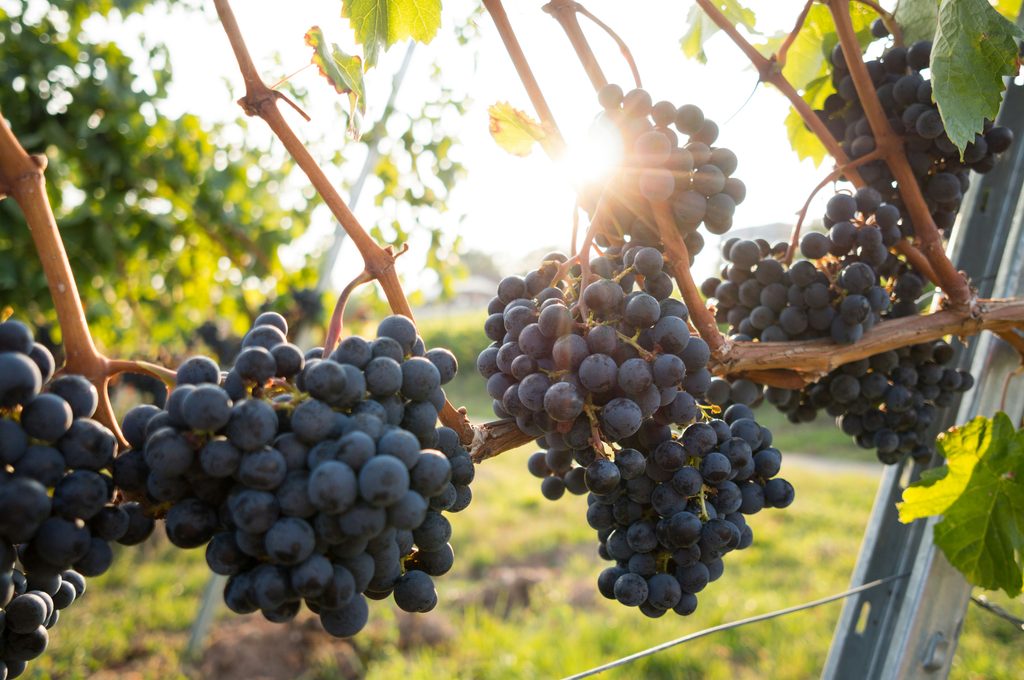
That mild weather is exactly what the grapes need for the final stretch. The harvest, the vendemmia, usually begins in September with the earliest varieties and runs into October, starting sooner in hot years.
It’s a beautiful time to be among the vineyards, as long as you know what to expect: wineries are working flat out, so book your tastings ahead.
But the harvest parties you may have seen online are mostly for the people doing the work, so unless you’re helping out with the harvest, the easiest way to join in is to head to a village wine festival.
As for crowds, they’re still noticeable in September, especially in the first half of the month, and they thin out as October approaches.
Our local tip: if wine is the reason for your trip, book a small family winery a few weeks ahead. During the harvest, a visit to a working cellar, with the smell of fermenting grapes in the air, tells you more about Tuscan wine than any tasting room.
Tuscany in October
Is October a good time to visit Tuscany? Yes, if you’d like a little bit of everything. Mild sunny days, vineyards turning red and gold, the end of the harvest and the start of the olive season.
The weather in Tuscany in October is lovely, with crisp mornings and afternoons sometimes warm enough to eat outside, although rain gets more frequent as the month goes on, so pack a light jacket, just in case.
Out in the fields, the last Sangiovese grapes are usually picked by mid-October, and soon after, whole families move to the olive groves to shake the branches over nets. It’s a sight worth stopping the car for.
As the work moves from vines to olives, the colors change too. In the second half of the month the vine rows turn rust and ochre, although the exact timing shifts a little every year with the weather.

October has its own festivals as well. At the start of the month, Gaiole in Chianti hosts L’Eroica, when thousands of cyclists on vintage bikes ride the white roads of Chianti. Grab a spot along the route and cheer them on, because it’s great fun.
Toward the end of the month, the mood changes in Lucca, which hosts Lucca Comics & Games, one of the largest comics festivals in Europe. Unless you’re a fan, it’s not the moment for a sightseeing visit. The streets inside the walls are packed, and hotels and parking fill up for days.
Trust us on this one, and come a week earlier or later, when you’ll find a much calmer Lucca.
Late October is also when some countryside businesses wind down for the winter. A few agriturismi close, and outdoor pools are usually closed or too cold for a swim by now, so if you’re still craving a dip, the thermal pools of places like Rapolano and Saturnia are a really lovely alternative.
Our local tip: save your countryside drives for the early afternoon. The light is beautiful, the roads are quiet, and you’ll be back before dark as the days get shorter.
Tuscany in November
Is November a good time to visit Tuscany? Yes, if you love food, quiet towns and soft light.
November weather in Tuscany is among the rainiest of the year, and the days are short, with sunset around 5 p.m. by the end of the month. In exchange, you’ll find new olive oil, white truffles and some of the calmest museums of the year. Not a bad deal, right?
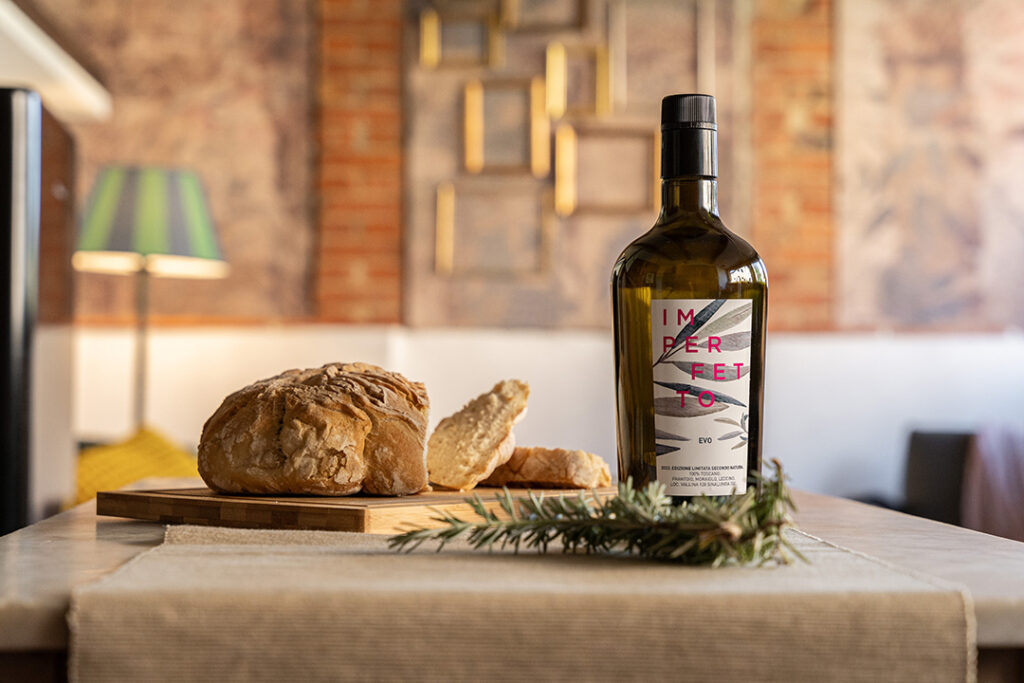
The olives picked in October now reach the mills, which makes this the month of olio novo, the new oil. It comes out cloudy, bright green and peppery, and the best place to taste it is at the mill itself, poured over warm bread.
Truffles follow close behind. Around San Miniato, white truffle season reaches its peak, and on the last three weekends of the month the town hosts its white truffle fair, the Mostra Mercato del Tartufo Bianco, when hunters, their dogs and the stalls fill the lanes with an unmistakable scent.
To wash it all down, November also brings vino novello, the very first young wine of the season. It’s lighter and fruitier than a typical red, almost like fresh grape juice, and dangerously easy to drink. Don’t let that fool you, though, it’s still wine.
The cold mornings bring one last gift. Mist rises from the valleys of the Val d’Orcia and turns the hills into something that looks painted by an old master.
Photographers come for exactly this, and they check the forecast for nights with the biggest gap between day and night temperatures, which is when the fog forms.

Stay in the fall
Homes among the vineyards and olive groves, close to the harvest.
Tuscany in Winter (December to February)
| Tuscany winter at a glance | |
|---|---|
| Temperature | 36 to 54°F (2 to 12°C) |
| Crowds | The lowest of the year, with a short peak over Christmas and New Year in Florence |
| Prices | The lowest of the year, ideal for longer stays |
| What to pack | A warm coat, shoes that don’t mind the rain, a scarf, and cozy socks for terracotta floors |
| Ideal for | Hot springs, Christmas markets, quiet towns, long lunches |
Winter is Tuscany at its quietest, and honestly, the season that feels most like home to us. We know, that probably comes as a surprise.
But imagine waking up to valleys veiled in mist or sparkling with morning frost, with skies so crisp you can see snow capping the mountains in the distance. Down in Florence, chestnuts roast on street corners and lunches naturally stretch on for hours.
We blame the cold, but truth be told? We just love an excuse to linger around a full table.
Sure, the days are shorter and some spots in the countryside close for the season, so you’ll plan a little more than you would in July. In return, you get the lowest prices of the year, blissfully quiet piazzas and, by your third morning, a local barista already making your coffee before you even ask.
Tuscany in December
Is December a good time to visit Tuscany? Yes, if you’d like Christmas markets, warm meals and towns without crowds, at least until the holidays.
December weather in Tuscany is cool, with short days and some rain, but sunny winter days are crisp and bright, perfect for wandering between Christmas stalls.
From late November, wooden stalls with mulled wine and crafts fill Piazza Santa Croce in Florence, and Arezzo hosts one of the best-loved Christmas markets in the region. Grab a cup of mulled wine and take your time: that’s the whole point.
In early December, a few olive mills are still pressing the last olives and black winter truffles start to show up on menus. Things get busier in Florence between Christmas and New Year, when Italians travel for the holidays, while the countryside stays quiet.
Siena, too, shows a different side in winter. Piazza del Campo, packed during the Palio, is wide open, and on sunny afternoons locals sit right on its bricks.
It’s also panforte season, and we never manage to stop at one slice. Try it and you’ll see why.
Our local tip: if the Christmas markets are on your list, go on a weekday in the first half of December, when the stalls are open and the cities are still calm.
Later in the month, between Christmas and January 6, opening hours change from place to place. The Uffizi, for example, closes on Christmas Day and adds special openings on other days, so check museum websites before you go and book restaurants ahead.
Tuscany in January
Is January a good time to visit Tuscany? Yes, if you want the region at its quietest, the lowest prices of the year and a good excuse to soak in hot springs.
In January the weather in Tuscany is usually at its coldest, with frost and fog in the hills, which raises an obvious question.
So, does it snow in Tuscany? In the mountains, yes. Monte Amiata, the Garfagnana and the Apennines get regular snow, and Abetone and Amiata even have ski slopes, while in Florence, Siena and the lower hills snow is rare and, when it falls, rarely lasts.
If you’re driving, keep in mind that many Tuscan roads require winter tires or snow chains in the car during the cold months, so ask for them when you book your rental.
The cold also makes this thermal water season. Tuscany sits on old volcanic land, and warm springs run all through the south of the region, from the free waterfalls of Saturnia to wild pools hidden in the woods. Sitting in warm water while the air around you is cold? That’s half the fun.

Wine lovers have their own reason to come, because the new vintage of Brunello di Montalcino reaches the market on January 1, five years after the grapes were picked. Many small wineries close in winter or open only by appointment, though, so call ahead.
Our local tip: January 1 and January 6 are public holidays, and many shops close on both days.
January 6 is the Epiphany, or la Befana for us. The night before, a kind old witch on a broomstick is said to fill children’s stockings with sweets, or with a lump of coal if they’ve been naughty, and for Italians the day marks the end of the holiday season.
Once the holidays are over, the rest of the month is yours: you can book a stay at short notice almost anywhere and visit the big museums with little or no wait.
Tuscany in February
Is February a good time to visit Tuscany? Yes, if you like quiet towns, crisp days and a carnival that’s anything but quiet.
The weather in Tuscany in February is still fully wintry, even if the days get noticeably longer.
Over on the coast, February is carnival time. On winter Sundays, usually in February, Viareggio throws one of the most famous carnivals in Italy, with giant papier-mâché floats, some as tall as a building and full of political satire, parading along the seafront. You have to see them to believe them.

Our local tip: check the carnival calendar before you book, because the parades fall on a handful of Sundays and the dates change every year. Then buy your ticket in advance, wear a mask and have fun!
We can arrange
A private chef cooking the day’s catch at your villa.
Stay in winter
Homes with fireplaces and room to settle in for longer stays.
The Best Time for…
While writing this guide, we kept thinking that one passion might be shaping your whole trip. If that’s you, here’s when Tuscany offers it at its fullest.
Wine and the Harvest
The best time to visit Tuscany’s vineyards depends on what you’d like to see. Come between September and mid-October for the grape harvest, in spring for quieter cellars and winemakers with time to chat, or in January for the release of the new Brunello.
Photography and Blooms
The colors change with the calendar: poppies bloom from late April through May, sunflowers from late June into July, and the vineyards turn rust and gold in October. Into misty valleys? Head to the Val d’Orcia on cold mornings from November through the winter.
Hiking and Cycling
Spring and fall are the most comfortable seasons for walking and cycling, while in summer it’s best to set off at dawn or head up to the mountains, where it stays cooler.
Beaches and the Coast
The sea is warm from June to September. July and August are the liveliest months on the coast, while June and September give you the same warm water with a lot more room on the sand.
Hot Springs
The thermal springs are open all year, but winter is when they’re most striking, with steam rising into the cold air.
A Honeymoon in Tuscany
It depends on the honeymoon you picture. May and June bring flowers, long evenings and warm nights on the terrace, while September and October add the harvest and golden light.
Winter has its own romance, with fireplaces, hot springs and the feeling of having the hill towns all to yourselves. Whatever the month, a private home with a view gives you a whole terrace for two.
Quieter Towns and Lower Prices
From November to March, outside Christmas and Easter, prices are at their lowest and the towns belong to the people who live there. It’s the season to stay longer and settle into a home, and shorter opening hours are the only thing to plan around.
Is There a Bad Time to Visit Tuscany?
Not really. Every month has something to offer, and the real question is what you’re after.
A few things are worth knowing in advance, though, so they become part of your plan instead of a surprise: the Ferragosto closures, the Easter crowds in Florence, the Palio days in Siena and Lucca Comics in Lucca.
Whatever the season, we give our guests the same advice, which is to base yourself in the countryside or in a smaller town like Siena, instead of doing everything on day trips from Florence.
That way you can visit the best-known villages in the evening, after the tour buses have left, and discover that San Gimignano at sunset feels like a completely different place from San Gimignano at noon.
Planning Your Trip From the US or From Europe
Flying in from the US? You’ll probably plan months ahead and stay a week or longer, so it’s worth choosing your season with care and booking early for spring and fall, when demand is high.
Most travelers fly into Florence or Pisa, often with a connection, or arrive by train from Rome or Milan. Either way, give yourself a slow first day to get over the jet lag, ideally somewhere with a view and nothing on the schedule.
From the rest of Europe, Tuscany is just a short flight away, which is why many of our guests come back in different seasons.
Short stays like these work beautifully in the off-season, when flights cost less and the region is at its quietest.
FAQ
When is the best time to visit Tuscany?
It depends on the Tuscany you want to find. Late April and May bring green hills and poppies, June to August the sea and long evenings, September and October the harvest and golden vineyards, and November to February truffles, hot springs and quiet towns.
Every month has its own reason to come.
Does it snow in Tuscany?
Yes, in the mountains, where Abetone and Monte Amiata have ski slopes. In Florence, Siena and the lower hills, snow is rare and usually melts quickly.
When is the rainy season in Tuscany?
Rain is most frequent from October to April, and November is usually the rainiest month of the year. It rarely rains for long stretches, though. Spring showers tend to be short, and summers are mostly dry.
What is the coldest month in Tuscany?
January, closely followed by February. The coast stays milder, while inland mornings bring frost and the mountains get snow.
Is Tuscany too hot in July?
July and August are the hottest months, especially inland, where afternoons can reach the 90s°F (mid-30s°C), while the coast is cooled by the sea breeze. That’s why you’d better plan your sightseeing for the morning and evening.
Does Italy shut down in August?
Not at all. Around Ferragosto, on August 15, many shops close and some family-run trattorias take their own break for a week or two.
Most restaurants stay open, though, and on the holiday itself they’re often fully booked, so reserve ahead. Museums, sights and beach towns stay open too.
When is the grape harvest in Tuscany?
Usually from September to mid-October. The exact dates change every year with the weather, and hot summers bring the harvest forward.
Is Tuscany worth visiting in winter?
Yes, if you enjoy quiet towns, hot springs, Christmas markets and hearty food, at the lowest prices of the year. Days are short and some countryside places close, so plan a little more than you would in summer.
Is Tuscany worth visiting?
We may be a little biased, but yes. Art cities, hill towns, vineyards, beaches, hot springs and some of Italy’s best food all sit within a couple of hours of each other, and every season shows a different side of them.
How many days do you need in Tuscany?
A week is a good start, two or three days in Florence and four or five in the countryside, based in one area so you can explore without packing your bags every day. With ten days or more, you can add the coast or a second base in the south of the region.
Which Door Will You Open?
Green hills and poppies in spring, the sea and long dinners outside in summer, the harvest and new oil in the fall, hot springs and quiet towns in winter: four seasons, four different doors, and every one of them leads somewhere worth going.
Now that you know when to come, our free seasonal guide can show you where to go, with the areas we love most and the little details that make each season special. Download the guide
Wherever you choose to start, we’ll be happy to help you find a home that feels like yours for a while.